Label Scanners

Errors when scanning labels can lead to incorrect shipments, product returns, and delays in the supply chain. Label scanners automate the reading of product information, thereby increasing the reliability of your processes.

They process large volumes quickly and recognize various barcode formats, minimizing errors caused by human intervention.
Real-time product tracking ensures that inventory levels and order statuses are accurately monitored, providing greater control and reducing inventory loss.

Fewer human errors

Automatic label scanners ensure consistent barcode recognition, even with damaged or partially visible labels. This helps prevent delays or errors in the logistics process.

Integration with existing systems

Scanners can be easily integrated into your existing ERP or WMS systems, ensuring that product information is immediately available and that your order processing runs seamlessly.

Label Scanners
Geautomatiseerde opslag met rijen donkere kratten op transportbanden
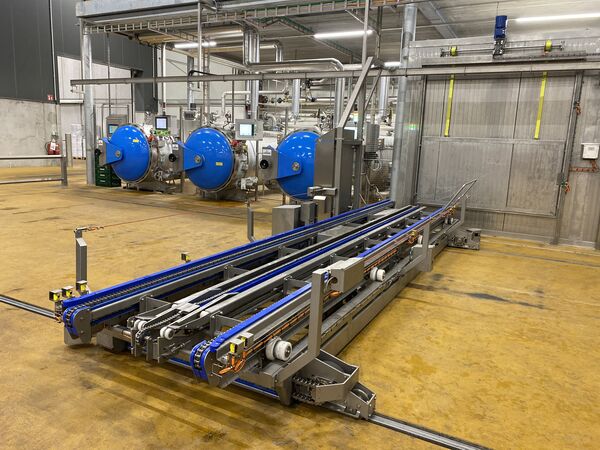
Industriële transportbanden met blauwe autoclaven voor voedselverwerking
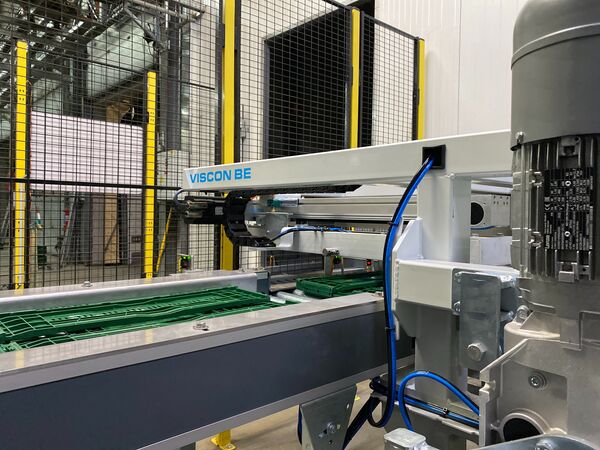
Viscon BE lineaire robot met gele veiligheidshekken en groene kratjes
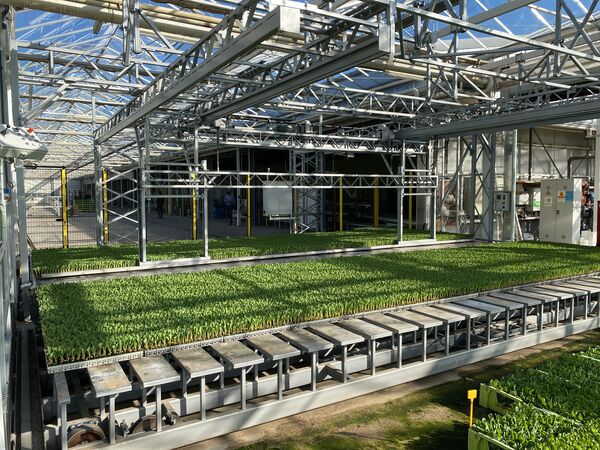
Geautomatiseerde transportsysteem in serre met plantentrays
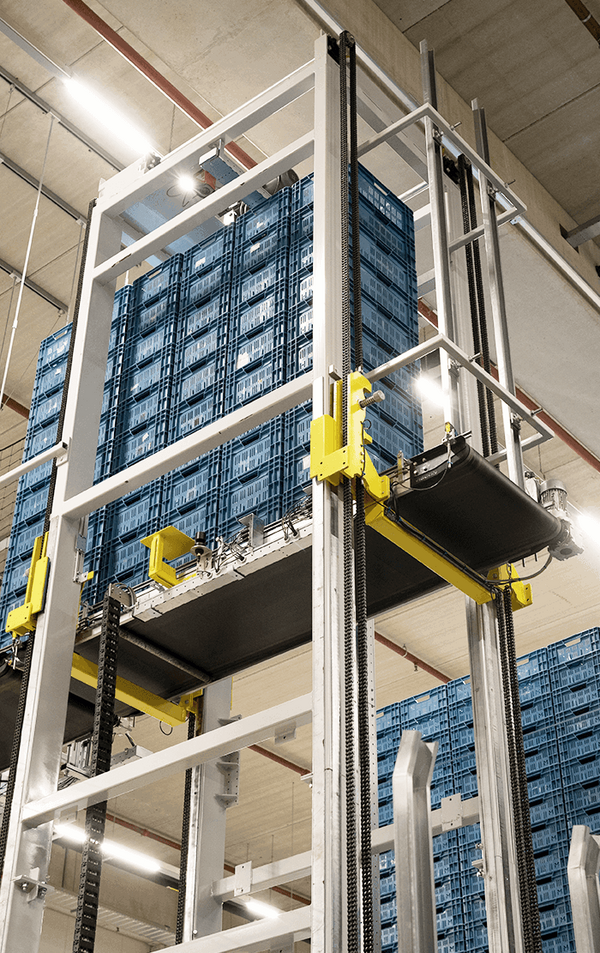
Geautomatiseerde palletlift met blauwe kratten in magazijn

Would you like to minimize errors in your order processing?

Discover how label scanners can make your logistics more reliable.

Name
Privacy Policy 

Any more questions?

Yves Ameye

Engineering Manager

Curious about our projects?

Find out what others have already hired us for—from machinery for food-grade bakery environments to automated crate warehouses. 
All Projects

Case: Sterima

Automated Processing of Sterile Packaging Pouches for Sterima

Sterima is a Belgian specialist in sterilization and sterile services for hospitals, medical companies, and the pharmaceutical industry. Within this sector, precision, reliability, and consistent processing are essential. To optimize the processing of sterile packaging pouches, there was a need for an automated solution that efficiently and accurately coordinates the various process steps.

Solution

Vycon developed a customized automated solution for processing sterile packaging pouches at Sterima. At the heart of the system is a robotic arm that picks up the pouches one by one and precisely places them on a conveyor belt. This ensures the pouches are automatically fed for further processing, with minimal manual intervention.

The solution combines robotics with automated process steps to ensure a smooth and consistent flow. Central to this is the precise handling of the packaging pouches, tailored to the specific requirements of the sterile environment in which Sterima operates.

Automated Processing System

Once the packaging pouches are suspended from the conveyor belt, they automatically proceed through the next steps in the process. First, they are identified and labeled. Next, the pouches are automatically filled.

By combining these various operations into a single integrated flow, processing proceeds in a structured and efficient manner. Automation minimizes the number of manual operations and ensures that the various process steps flow seamlessly into one another.

Integration and Results

With this solution, Sterima automates a significant portion of the processing of sterile packaging pouches. The combination of robotics and automated process steps ensures consistent processing, a smooth flow, and less manual intervention.

The project illustrates how Vycon uses customized automation to address the specific needs of an industrial environment. By prioritizing accuracy and reliability, the system supports efficient and streamlined processing at Sterima.

Go to this case

Case: Kentucky Horsewear

Automated Online Store Processing at Kentucky Horsewear

Kentucky Horsewear specializes in high-quality grooming and protective products for horses and offers an extensive range of products for both horses and riders. To further optimize the processing of online store orders, there was a need for an automated solution that combines speed and accuracy with a user-friendly work environment for operators. In addition, the system had to be able to efficiently process various orders and product types, even at high volumes.

Solution

Vycon implemented a fully automated solution for order processing at Kentucky Horsewear. At the heart of the system is a Pick- & Put-to-Light solution that guides operators through the picking and consolidation of products using clear visual cues. This makes it immediately apparent which item belongs to which order and which products need to be packed together.

The installation was designed with ease of use as a key priority. By minimizing the number of manual actions and decisions required of the operator as much as possible, the system ensures a clear and intuitive workflow, even when multiple orders and product variants are being processed simultaneously.

Automated Packaging Process

After an order is assembled, the rest of the packaging process is carried out fully automatically. The box is first scanned and inspected, after which a robotic arm adds the correct packing slip. The box is then automatically sealed and taped, and the correct shipping label is applied.

Finally, each finished box is automatically sorted to the correct carrier. This ensures that the entire process—from picking the products to preparing the order for shipment—is handled in a single integrated workflow.

Integration and Results

The automated system ensures smooth and reliable processing of online store orders, with minimal manual intervention. Thanks to visual order guidance, errors during picking are minimized, while the automated packaging and sorting system ensures consistent and efficient handling of every order.

With this solution, Kentucky Horsewear combines high processing capacity with a user-friendly work environment for operators. The result is an integrated online store process that is ready to handle large volumes and a wide variety of orders.

Go to this case

Case: Hammers

Automated press loading for maximum flexibility at Haemers

Haemers specializes in the production of stamped parts based on customer drawings or models and also offers an extensive range of flat washers, with no fewer than 5,800 different sizes and various materials. To further optimize production, a flexible and automated solution was needed for loading a new stamping press. The challenge lay in the wide variety of sizes, the desired level of autonomy, and the need for quick and ergonomic changeovers between different production batches.

Solution

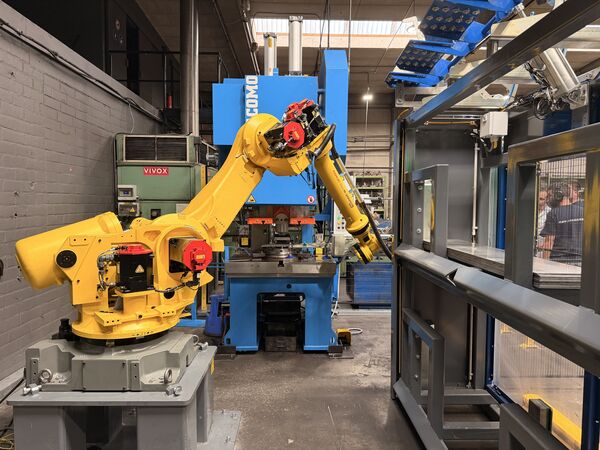
Vycon implemented a fully automated loading solution for Haemers’ press system. At the heart of the solution is a robot that automatically loads the press. To ensure maximum autonomy, a dual-loading station was chosen. This allows a new sheet to be prepared while the robot continues production, thereby minimizing downtime between different batches.

The press purchased by Haemers was fully integrated into the automation solution. Vycon was responsible for the engineering and integration of the robot, the customized gripper, the discharge conveyors, and the various peripheral components.

Flexibility and Material Optimization

Taking into account the wide variety of dimensions within Haemers’ product range, the system was designed with rapid and flexible changeovers in mind. The decision to work with sheets rather than coiled steel was also incorporated into the automation design.

Additionally, further optimizations were identified during the engineering process. For example, the new method ensures that less material is lost between the various rings. This results in more efficient material usage and significant savings on raw materials.

Integration and Results

The automation system enables the press to run faster while simultaneously increasing flexibility and production capacity. Thanks to the high level of autonomy and minimal downtime between batches, Haemers can produce more efficiently, while ergonomics for the operators are significantly improved.

The project illustrates the added value of an integrated approach that combines mechanical engineering, robotics, electrical engineering, and software development in-house. By working closely with Haemers, Vycon was able to deliver a fully customized solution that not only enables the automation of the press system but also contributes to a more efficient, flexible, and ergonomic production process.

Go to this case

Case: Warnez

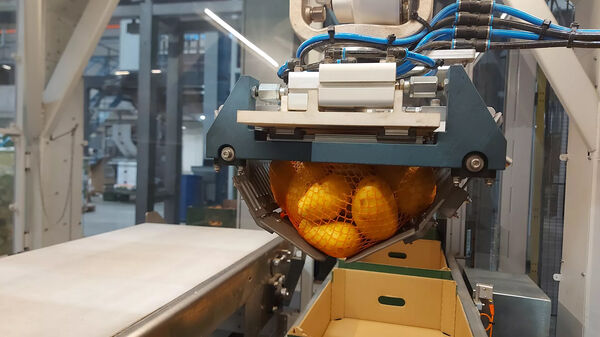
Automated crate handling and palletizing for potato packaging at Warnez NV

Warnez NV is a family-owned company specializing in potato processing and packaging, with a strong focus on efficiency and quality in its production process. To further optimize the existing packaging line, there was a need for an additional automated flow that could be seamlessly integrated into the existing infrastructure, with a focus on accuracy, speed, and traceability.

Solution

Vycon implemented the integration of an additional automated line onto the existing main line. From the overhead conveyor, folding crates are automatically fed to the filling machine, where they are precisely filled with the correct weight of potatoes via a distribution section. This controlled feed ensures a stable and reproducible filling process, regardless of variations in product supply.

Weight Check and Labeling

Each filled crate is then checked by an integrated weighing unit. The weight data is automatically transmitted to a printing system that produces custom labels. A robot then picks up these labels and places them precisely into the designated slot on each crate, ensuring that every package is correctly labeled and traceable.

Automatic handling and discharge

After labeling, the crates are returned to the upper conveyor line and transported to an automatic stacker. This stacker efficiently places the crates onto pallets, ready for further logistics processing and distribution.

Integration and Results

The expansion was fully integrated into the existing system at Warnez and enhances the automation of their packaging process. The result is higher processing capacity, consistent product quality, and highly optimized handling of folding crates with minimal manual intervention.

Go to this case

Case: De Trog Organic Bakery

Automated packaging line for artisanal rolls at Bio Bakkerij De Trog

Bio De Trog produces artisanal rolls on a large scale and was looking for an efficient solution to further automate the packaging process. The existing manual handling of boxes and products created limitations in terms of speed, ergonomics, and consistent box filling. In addition, the system had to be flexible enough to handle different product flows and integrate seamlessly with the existing packaging line.

Solution

Vycon implemented an automated packaging system in which packaged rolls are automatically processed into finished boxes. A robot first retrieves a folded box from the planobox and unfolds it using an integrated box folder. The packaged rolls are then fed via roller conveyors, after which the same robot places them into the box according to a smart stacking pattern to optimize volume utilization.

Automated Finishing

After filling, the box is automatically conveyed further along the line. A case sealer carefully seals the package, after which a labeling system applies the correct identification to each box. The finished boxes are then efficiently conveyed via the integrated roller conveyor for further logistics processing.

Integration and Results

The system was fully tailored to Bio De Trog’s production environment and now ensures a reliable and continuous packaging flow. Thanks to automation, capacity has increased, the ergonomic strain on operators has been significantly reduced, and every box is filled consistently. The result is an efficient, future-oriented packaging solution with a smooth product flow and minimal manual intervention.

Go to this case

Case: Locinox

Automated interim storage as a link in the production process at Locinox

Locinox, a specialist in high-quality locks and accessories for gates and fences, was looking for a more efficient way to temporarily store components and ensure their controlled flow between picking, assembly, and production. The challenge lay in managing a large number of crates without disrupting the flexibility and pace of production. Together with Vycon, an automated solution for interim storage was implemented.

Intermediate Storage Integrated into the Production Workflow

Within Locinox’s production environment, the availability of parts is crucial. Components must be picked quickly for assembly and then returned smoothly to the production line. Traditional storage was no longer sufficient to support these dynamics.
Vycon approached the role of interim storage as an active process step and designed a system that combines storage, movement, and redeployment within a single controlled flow.

Engineering of the Automated Warehouse

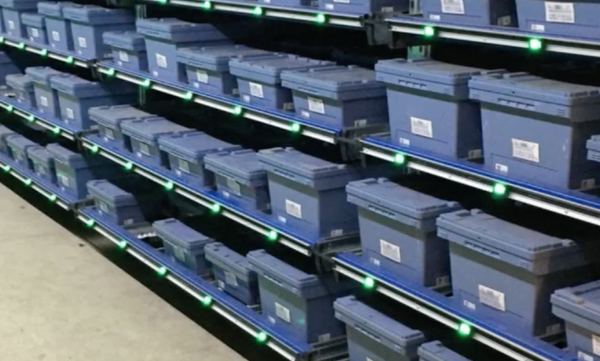
The solution consists of an automated Kardex warehouse with cranes that manage approximately 30,000 crates. The mechanical design, warehouse structure, and control system are designed as a single integrated system. Crates are stored, retrieved, and re-delivered to picking and assembly zones in a targeted manner, driven by production demand.
The automation ensures high storage density, precise handling, and predictable throughput within the available space.

More control, fewer manual operations

Thanks to the automated intermediate storage system, Locinox now has a logistics link that adapts to production. Manual operations are minimized, parts are available more quickly, and the internal flow remains organized, even when demand fluctuates. For Vycon, this project confirms its expertise in designing and integrating smart warehouse solutions that structurally support production processes.

Go to this case

Case: Billiet

Automated Internal Transportation at Billiet

For Billiet, a multi-brand distributor serving the retail and hospitality sectors, a smooth and error-free outbound flow is an essential part of its service promise. The combination of high volumes, diverse order profiles, and customer-specific deliveries called for a redesign of the internal goods transport system. Vycon was brought in to technically analyze this process and translate it into a scalable automation solution.

Engineering Based on Flow and Data

The project began by mapping outbound flows, peak loads, and required sorting levels. Based on this, Vycon designed a scanning, weighing, and sorting system that processes and tracks each package individually. By integrating scanning and weighing early in the process, continuous control over routing, capacity, and error detection is achieved.
The buffer carousel functions as an active intermediate station that absorbs peaks and stabilizes the sorting pace.

System Design and Integration

The outbound system consists of a central conveyor line with a buffer carousel and 26 customer-level sorting lines. The mechanical design, control system, and layout are coordinated to ensure a constant flow of packages, with minimal manual intervention. Integration into the existing logistics environment was carried out without disrupting daily operations.

Results in Operation

The automated system increases processing capacity and brings structure to a complex outbound process. Sorting at the customer level and controlled buffering reduce the risk of errors and keep the flow manageable, even with fluctuating volumes. For Billiet, this means a robust logistics foundation that is perfectly capable of adapting flexibly to operational realities.

Go to this case

Case: The Potato Farm

Robotic Packaging of Potatoes

Over the past few decades, De Aardappelhoeve in Tielt has evolved from a mixed-crop farm into a highly automated player in the cultivation, storage, processing, and packaging of potatoes for the fresh market. This growth has been accompanied by increasingly stringent requirements in terms of efficiency, ergonomics, and reliability. Together with Vycon, the company took the next step in automating the packaging process, leveraging robot technology.

From Growth to the Need for Automation

Due to the significant increase in volumes and the wide range of packaging formats, the workload on the packaging department grew. The manual handling of bags and boxes became an increasingly heavy burden, both organizationally and ergonomically. De Aardappelhoeve therefore sought a solution that could not only accommodate the increased capacity but also structurally contribute to a better working environment and stable output. Vycon was brought in to translate this challenge into an automated concept that could integrate with the existing lines and enable future growth.

Robotic Packaging Integrated into the Production Flow

The project resulted in the delivery and integration of a fully automated robotic system for handling and packaging bags and boxes. The robots take over repetitive and physically demanding tasks and ensure consistent, controlled processing through to palletizing.

Vycon built upon previous automation initiatives within the company, which already included a highly automated palletizing section. By seamlessly integrating robotic packaging into that flow, a logical and efficient end-of-line system was created.

Greater efficiency and ergonomics, with an eye toward the future

With the expansion of the robotic system, the handling of large pallet boxes was also further optimized. The combination of robotic technology and a well-thought-out layout now ensures a smoother flow, fewer manual operations, and greater process reliability.

For De Aardappelhoeve, this means not only an immediate gain in efficiency and ergonomics but also a future-oriented design for the packaging department. For Vycon, the project reaffirms its role as a designer and integrator of robotic packaging solutions within complex food environments.

Go to this case